In 2021 I saw many people claim that the United States will abandon the Middle East. This is ridiculous. The United States is staying in the Middle East, as analyst Dalia Kaye from the University of California in Los Angeles wrote in Foreign Affairs magazine a month ago.
The Biden administration finished a big review of American military deployments around the world in November. As expected, the study concluded that China is the biggest strategic challenge. But as analyst Rebecca Wasser wrote in the strategy website War on the Rocks in December, the review did not call for any big changes in American military deployments in the Middle East.
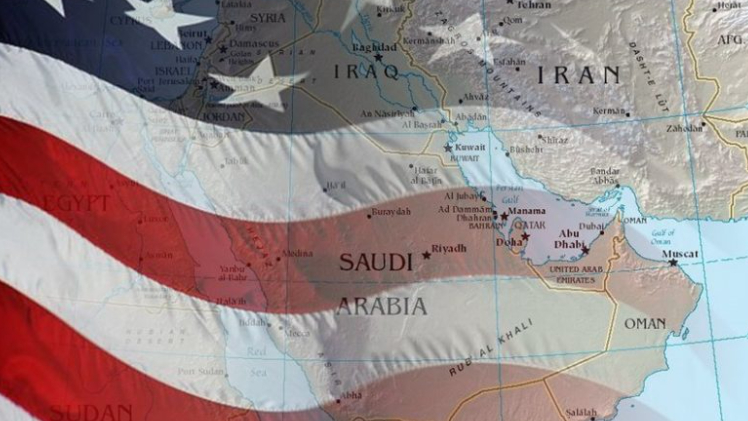
First, the Americans are keeping their bases in the Arab Gulf region in countries like Kuwait, Bahrain, Qatar and the United Arab Emirates. They are expanding the Muwaffak Salti airbase in Jordan. At the same time, the American navy continues to operate in the Gulf and near the Arabian Peninsula. The exact number changes from day to day with rotation of military units but last June there were around 40,000 US forces in the Mashreq and Gulf regions. Defense Secretary Lloyd Austin reminded the Manama security conference in November that the United States “has very real combat power in the region and we can and will maintain it.”
The last three American presidents have looked at the wars in Iraq and Afghanistan and are cautious about starting a new land war in western Asia. Caution about launching a new war is, of course, not the same thing as defending or withdrawing.
Second, neither Trump nor Biden withdrew all the American forces out of Syria or Iraq. In fact, the number of soldiers hasn’t changed for about two years and will not change much during the next few years. The Americans have promised not to undertake unilateral combat missions in Iraq and that is new. Their mission now is to improve the capability of Iraqi counter-terrorism forces. In Syria, the Americans remain to build the strength of the Syrian Democratic Forces against ISIS. Five years after the recapture of Mosul from ISIS and three years after the recapture of Baghouz in eastern Syria, ISIS remains a persistent problem. It is reasonable to ask if American soldiers can fix the ISIS problem definitively, but in any case, the American forces are not leaving Syria and Iraq in the near future.
Similarly, Washington’s decision to remove some American Patriot anti-missile systems from Saudi Arabia last summer is not evidence of an American preference to withdraw all its forces. First, the Patriots are not designed to block drone attacks. Second, the Saudi Arabian military is more capable at defending against drone and missile attack, as demonstrated against attacks last September and last month. Third, despite criticisms from political opponents in Washington, Austin and President Biden last month pressured the Congress to approve the sale of missiles able to intercept drones to the Saudi Air Force. Austin in his November speech in Bahrain had emphasized that the Americans wanted to share responsibility for the region’s defense with regional states. This was an example similar to American help to Iraqi counter-terrorism units and the Syrian Democratic Forces.
What about the future? The Biden administration last month brought Ilan Goldenberg as a senior policymaker to the Defense Department. Goldenberg before had been an analyst at a research center in Washington connected to the Democratic Party. Earlier in 2020 he helped write a set of recommendations that urged the Biden administration to (1) focus on the counter-terrorism mission in the region, not a new land war like 1991 or 2003; (2) reduce the size of the big American bases in the Gulf and move some American forces to other sites in the region farther from Iranian missiles; (3) negotiating with partners to ensure American access to ports and airports to send more American forces to the region if there was an urgent situation.
It is worth noting that Austin in November said that if needed the Americans can move more combat forces to the region “because that is what global powers do.”
Of course, events in Asia, in Europe and with Iran will affect the future American military position in the Middle East. Will China and Russia have more influence in the region? Of course. Who thought Russia would stay in chaos after the collapse of the Soviet Union in 1990? And China has the world’s largest population and a huge economy. Regardless of its many political problems, America is no longer the single superpower. But any foreign leader who expects the American political class will abandon the Middle East doesn’t understand American domestic politics or Biden’s policy that seeks to share responsibility for stability in the region with America’s partners.